The Language of Pride: Understanding Pride Flags & The 25 Flat Outline Icon Collection
In the vibrant tapestry of the LGBTQIA+ community, pride flags serve as more than just colorful banners; they are symbols of identity, history, solidarity, and hope. Each stripe and hue tells a story, representing the diverse experiences and identities within the community. For designers, educators, activists, and allies, having access to accurate, versatile symbols is crucial for clear communication and inclusive representation. This is where comprehensive icon collections, like a 25 Flat Outline Pride Flag Icons Collection, become invaluable tools for modern digital and physical expression.
More Than a Rainbow: The Purpose and Significance of Pride Flags
The iconic rainbow flag, created by Gilbert Baker in 1978, is a universal symbol of LGBTQIA+ pride. However, the community's richness is reflected in the many flags that have since been created. These flags serve several key purposes:
- Identity & Visibility: They allow individuals to publicly and proudly express their specific identity, whether it's bisexual, transgender, nonbinary, or asexual. This visibility fosters self-acceptance and helps others recognize the spectrum of human experience.
- Community & Belonging: Seeing a flag that represents one's identity creates a sense of connection and belonging. It signals safe spaces and finds community, both online and in the physical world.
- Education & Advocacy: Flags are powerful educational tools. They spark curiosity and conversation, helping to explain complex identities like demisexual or genderfluid in a visual, accessible way. They are central to advocacy work, promoting understanding and tolerance.
Common misunderstandings often reduce LGBTQIA+ symbolism to just the rainbow flag. While it is a powerful umbrella symbol, the specific flags acknowledge that experiences under that umbrella are not monolithic. Using the correct flag shows respect for the unique history and challenges of each identity.
A Modern Toolkit: The 25 Flat Outline Pride Flag Icons Collection
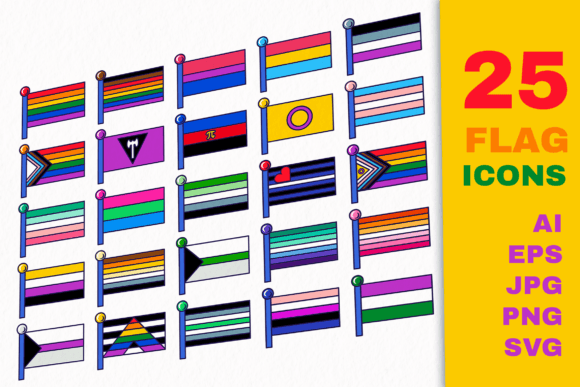
In our digitally-driven world, visual communication is paramount. A collection of 25 flat outline pride flag icons translates these vital symbols into a versatile, modern design format. This particular collection, as described, includes a comprehensive range of flags covering identities such as abrosexual, agender, aromantic, intersex, pansexual, polyamory, and the Progress Pride flag. But what makes such a collection so practically relevant?
Design Versatility for Multiple Applications
The flat outline style is clean, scalable, and easily integrated into various media. This design approach ensures the icons remain clear and effective whether they are tiny app buttons or large banner graphics. The included file formats—AI, EPS, SVG, PNG, JPG—are the standard for professional and amateur design work.
- Digital Spaces: Perfect for website navigation icons, social media post graphics (like stories or posts for Happy Pride Day), application interfaces, and video animations. The transparent PNGs allow seamless overlaying on any background.
- Physical Media: Ideal for print templates, promotional materials, presentation slides, shop tags, and protest signage. The high-resolution files (up to 6000px width) guarantee crisp prints.
- Educational & Infographic Use: The set is a ready-made library for creating educational infographics about LGBTQIA+ identities, timelines of flag history, or charts explaining terms like genderqueer versus nonbinary.
Promoting Inclusion Through Accurate Symbols
Using this collection promotes deeper inclusion. For instance, the Philadelphia and Progress flags incorporate black and brown stripes to highlight LGBTQIA+ people of color, and the trans-inclusive gay men's flag addresses a specific intersection. The intersex-inclusive progress flag further broadens representation. By offering these specific icons, the collection encourages designers to move beyond generic rainbow imagery and embrace precise, inclusive symbolism that says "Love Is Love" for everyone.
For businesses and organizations, using these icons in their Pride month communications or on their digital platforms signals a nuanced, informed support for the LGBT community, aligning with modern values of diversity and tolerance.
Exploring Key Flags in the Collection
To build a broader understanding, let's explore a few significant flags included in such a 25-icon collection, highlighting their meaning and relevance.
The Evolution of Umbrella Symbols
The Traditional Gay flag (often the rainbow) and the Progress Pride flag show how symbols evolve. The Progress flag, designed by Daniel Quasar in 2018, adds a chevron of black, brown, light blue, pink, and white stripes to the rainbow. This explicitly includes transgender individuals and LGBTQIA+ people of color, addressing previous critiques of the rainbow flag's inclusivity. It's a powerful symbol for the movement's ongoing journey toward equality for all.
Flags for Specific Orientations & Identities
- Bisexual, Pansexual, Polysexual: While often confused, these flags represent distinct orientations. The bisexual flag (pink, purple, blue) denotes attraction to more than one gender. The pansexual flag (yellow, cyan, pink) signifies attraction regardless of gender. The polysexual flag (green, pink, blue) represents attraction to multiple, but not all, genders. Clear icons help distinguish these in educational materials.
- Asexual & Aromantic: These flags (often featuring black, gray, white, and purple or green) validate identities where sexual or romantic attraction is absent or limited. They are crucial for representing experiences outside societal norms of attraction.
- Transgender & Nonbinary: The light blue, pink, and white transgender flag and the yellow, white, purple, and black nonbinary flag are central to gender identity recognition. They are symbols for the fight for transgender rights and the visibility of genders beyond the binary.
Community & Historical Flags
The collection also includes symbols for subcommunities and historical icons. The Bear Brotherhood flag represents a subset within the gay community. The Labrys Lesbian flag, featuring a double-bladed axe, is a historical feminist and lesbian symbol. The Leather flag denotes the leather subculture. These icons preserve niche histories and allow for specialized representation.
Integrating Pride Symbols into Daily Life & Work
This icon collection fits seamlessly into modern life. An educator can use the SVG files to create classroom materials about gender tolerance symbols. A marketing professional can use the JPG files to design inclusive promotional media for a client. A developer can implement the small PNGs as icons in a community-focused app. A blogger writing "Love Wins" content can embed them for visual appeal.
In daily activities, these icons allow individuals to customize their digital environments—as phone wallpapers or social media avatars—with symbols that affirm their identity or values. They turn abstract concepts of support and love into tangible, shareable graphics.
Conclusion: Symbols as Bridges to Understanding
A comprehensive 25 Flat Outline Pride Flag Icons Collection is more than a design asset; it's a bridge to understanding. By providing clean, editable, and organized vectors of the LGBTQI rainbow pride different labels, it empowers people to communicate the complex, beautiful realities of the LGBTQIA+ community with clarity and respect. Whether for a social media story, a university presentation, a shop tag, or a protest sign, these icons help ensure that every Pride Day holiday and every day beyond is celebrated with the full, colorful spectrum of human identity in mind. When we use the right symbols, we don't just say we support love; we show we understand it.