Running Elements Vector Illustration: A Toolkit for Visual Energy
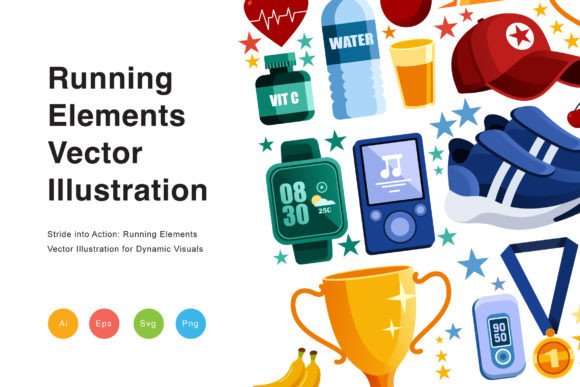
You’re crafting a poster for a local 5K charity run. You’re updating your fitness coaching website. You’re designing an infographic about heart health for a community newsletter. In each case, you need imagery that conveys motion, vitality, and purpose. Stock photos of runners can sometimes feel staged or limited in perspective. This is where a dedicated Running Elements Vector Illustration set becomes not just a graphic asset, but a practical solution. It’s a collection of scalable, editable artwork focused entirely on the act and spirit of running.
Where Visual Energy Meets Real-World Projects
Unlike a single image, a vector illustration set provides a system of parts. Think of it as a visual vocabulary. You have runners in different poses—the powerful lean of a sprinter, the steady rhythm of a marathoner, the relaxed stride of a jogger. You might have isolated elements like sneakers, finish line banners, or path markers. This versatility is what makes it useful across so many contexts.
For the marketer or event organizer, these vectors are the backbone of a cohesive campaign. From the social media teasers to the race day program booklet, using consistent, custom-styled illustrations creates a professional identity that generic photos can’t match. You can easily change colors to match your brand, isolate a single runner for a spot graphic, or combine multiple elements into a dynamic scene for the main event banner.
Beyond Events: Fueling Content and Communication
The application extends far beyond marathon posters. Bloggers and content creators in the health, wellness, and lifestyle spaces constantly need fresh visuals. A detailed vector of a runner against a sunrise can be the perfect featured image for an article on morning routines. An illustration of a group running can visually support a piece about community fitness. Because vectors are scalable, they look crisp on any device, from mobile screens to high-resolution desktop displays, keeping your site looking polished.
Educators and trainers find immense value here. Creating a presentation on biomechanics? Use the vector figures to highlight proper form. Developing a handout for a corporate wellness program? Integrate jogging illustrations to break up text and reinforce the message of activity. The clarity of line art often communicates concepts more directly than a complex photograph.
Thinking Like a User: From Download to Application
When you acquire a Running Elements Vector Illustration pack, you’re usually getting files in multiple formats: EPS and AI for professional vector editing in Adobe Illustrator, SVG for web use and modern design tools, and PNG for quick, ready-to-place raster images. This flexibility caters to different skill levels. A freelance graphic designer will dive into the AI file to tweak every stroke. A small business owner using Canva might upload the PNGs for immediate use. A web developer can embed an SVG directly for a scalable, performance-friendly site icon.
Consider your own workflow. If you plan to integrate these visuals into branded materials repeatedly, the editable vector formats (AI, EPS) are crucial. They allow you to recolor elements to your exact palette, combine shapes, or even adjust poses slightly. If your need is more immediate—like spicing up a single blog post—the PNGs offer a hassle-free solution.
Scenarios That Spark Ideas
Imagine a physical therapist creating a patient education pamphlet about knee rehabilitation exercises. A gentle vector illustration of a person jogging on a soft path can be more encouraging and relevant than an abstract medical diagram. A corporate HR team promoting their annual “Step Challenge” can use these illustrations in email headers, internal portal banners, and printed flyers around the office, creating a unified and motivating visual theme.
For the entrepreneur running a fitness app, these assets are integral to UI design and marketing. A clean, simple runner icon could represent the “Start Run” button. More detailed scene illustrations could be used in the app’s promotional videos or website to convey the community and achievement it fosters. The vectors become part of the product’s sensory experience.
What to Consider Before You Use Them
While the utility is broad, a little forethought ensures you get the most from the resource. First, assess the style and tone of the illustrations. Are they modern and minimalist, or detailed and realistic? Does the aesthetic align with your existing brand or project voice? Using a cartoon-style runner on a serious medical site might not fit, whereas that same style could be perfect for a youth sports club flyer.
Second, think about composition and isolation. A good set should offer both full scenes and isolated elements. Can you extract a single runner from a group scene easily in your software? Are there enough individual components (like shoes, stopwatches, trees) to build your own custom scene if needed? This dictates how creatively you can apply the pack.
Finally, consider technical compatibility. If you primarily use a tool like Figma or Affinity Designer, confirm that the SVG or EPS files import cleanly. Check the license terms to ensure your intended use—whether it’s a commercial website, a free community pamphlet, or a for-sale ebook—is permitted. Most standard licenses for such resources allow for broad commercial use, but it’s always wise to confirm.
Connecting Features to Real Outcomes
The fact that these are vectors isn’t just a technical detail; it’s a functional benefit. Scalability means the runner graphic on your business card can be the same asset, just resized, as the giant mural print at the event registration desk—with zero loss in quality. Editability means you’re not stuck with a blue shirt if your brand color is green; you can change it in minutes. The focus on varied poses and scenarios directly translates to storytelling breadth. You can visually narrate the journey from a solo training run to a crowded race day celebration using components from the same cohesive set.
In essence, a well-crafted Running Elements Vector Illustration collection provides a go-to visual language for anyone communicating about movement, fitness, goals, and community. It saves you time searching for disparate images and gives you the creative control to make the visuals truly yours. Whether you’re a professional designer assembling a client’s campaign or a hobbyist putting together a newsletter for your running club, these tools help you ignite that spirit of motion in your work, making your message not just read, but felt.