Escaping the Visual Metaphor: When Tiny People Illustrate a Giant Debt Problem
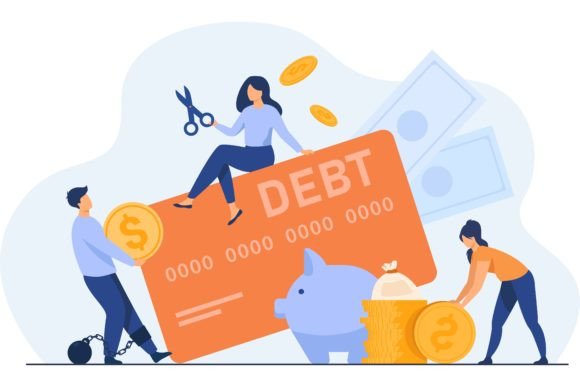
You may have seen the image: a cartoon world where minuscule figures are overwhelmed by enormous credit card statements, locked behind towering walls of debt, or pouring coins into a bottomless pit of interest. The Tiny People in Trap of Credit Card Debt illustration is a powerful visual metaphor that has permeated financial infographics and educational materials. It simplifies a complex, stressful reality into an instantly understandable scene. But what happens when we step out of the cartoon and into the real world? This flat vector illustration is more than just a cute graphic; it represents a widespread psychological and financial experience. Understanding the mechanics behind the metaphor can be the first step toward dismantling the trap it depicts.
Decoding the Imagery: What Each Cartoon Element Represents
The common tiny people in trap of credit card debt flat vector illustration isn't random. Every component is carefully chosen to symbolize a specific aspect of debt dynamics.
The tiny people themselves represent the consumer. Their small size illustrates a feeling of powerlessness and insignificance against the massive financial systems. The trap—often a cage, a looming credit card shape, or a deep hole—symbolizes the cyclical nature of debt. It feels inescapable, designed to keep you inside. The money these cartoon characters are paying, usually as a stream of coins or bills, highlights the ongoing, draining expense. It’s not a one-time payment but a continuous outflow. Finally, the oversized credit card or interest rate percentages in the background represent the overwhelming source of the problem, often faceless and institutional.
This imagery resonates because it mirrors internal feelings. Debt can shrink your sense of financial agency and expand your perceived obstacles, exactly as the illustration shows.
The Psychology of the Debt Trap
Moving from the image to the mind, the trap is often psychological before it is purely numerical. Credit card debt frequently begins not with a catastrophe, but with a convenience—a managed tool for cash flow. The shift from tool to trap can be gradual. A flat vector illustration captures a static moment, but in reality, the trap builds over time through a combination of habits, external pressures, and compound interest.
One key mechanism is the minimum payment illusion. The monthly minimum payment, a small amount, can make the debt feel manageable, like a tiny person tossing a few coins. This action maintains the trap but never reduces its walls. It creates a false sense of progress while interest silently enlarges the total burden. Another is emotional spending. In times of stress, anxiety, or even celebration, the credit card becomes an easy emotional release, adding another brick to the enclosure. The cartoon simplifies this, but the real-world behavior is a series of small decisions that accumulate into the illustrated scene.
The Real-World Mechanics: Interest and Infographics Concepts
The financial interest and infographics concept hinted at in these illustrations is where the abstract becomes concrete. Interest isn't a passive background element; it's the active engine of the trap.
Consider a typical scenario: a $5,000 credit card balance with an 18% Annual Percentage Rate (APR). If only the minimum payment (often around 2% of the balance) is made each month, the repayment timeline stretches into decades, and the total amount paid can double or triple the original debt. This is the mathematical reality behind the tiny person endlessly paying. Infographics that pair the cartoon with a chart showing this compounding effect are particularly effective. They bridge the emotional metaphor with the factual data, showing not just the feeling of being trapped, but the precise structural reason why.
Beyond the Single Image: Debt as a System
While a single illustration shows an individual trap, real-world credit card debt often exists within a system of interconnected pressures. For professionals, business owners, and creators, debt might intertwine with business expenses, irregular income, and investment pressures. For consumers and families, it links to childcare costs, home repairs, and medical emergencies. Educators and researchers might see it as a societal issue affecting student outcomes and community wealth.
This systemic view suggests that escaping the trap requires a systemic approach. It's not just about one person climbing out of a hole; it's about understanding the landscape that contains many such holes. This includes examining spending triggers, budgeting systems, income streams, and even the broader economic factors that promote reliance on credit.
Actionable Pathways: From Illustration to Liberation
The value of the Tiny People in Trap of Credit Card Debt metaphor is that it prompts a question: How do we escape? The visual implies a need for a ladder, a key, or a change in scale. Practically, this translates to specific financial strategies.
- Snapshot Your Trap: Create your own personal infographic. List all debts, their interest rates, minimum payments, and total balances. Seeing the full picture, as the illustration does, breaks the habit of ignoring the looming whole.
- Reverse the Payment Flow: Instead of mimicking the cartoon character paying a tiny stream, aggressively increase the payment volume. Strategies like the debt avalanche (paying highest-interest debt first) or debt snowball (paying smallest-balance debt first) actively shrink the trap's walls.
- Alter the Landscape: Seek to change the terms of the trap itself. This can involve negotiating with creditors for lower rates, consolidating debt through a lower-interest personal loan, or, in some cases, exploring reputable credit counseling services.
- Build Your Size: In the metaphor, the people are tiny. In reality, you can grow your financial stature by increasing income through side work, career advancement, or monetizing a hobby. More income provides a taller ladder to climb out.
These steps move you from being a subject in a static illustration to being the author of a dynamic financial story.
Considerations for Different Audiences
The approach to dismantling debt will vary across the broad audience this topic reaches.
For business owners, separating personal and business credit is crucial. The trap can be doubly dangerous if business cycles dictate personal cash flow. Creators and freelancers with variable income might focus on building emergency savings during high-income periods to avoid credit reliance during lean months. Researchers and educators might emphasize the sociological tools and community resources available. Hobbyists could examine how project costs are funded, perhaps shifting from credit to a dedicated hobby savings fund. Each group can find a tailored exit path from the generalized trap shown in the vector art.
The Role of Visualizations in Financial Literacy
Ultimately, the prevalence of the tiny people in trap of credit card debt flat vector illustration underscores the importance of visual communication in financial education. Complex, anxiety-inducing topics become approachable through analogy. This particular image succeeds because it externalizes an internal feeling of being small and confined.
For anyone teaching, advising, or explaining debt concepts, leveraging such metaphors—and then moving beyond them to concrete numbers and actions—is a powerful method. The illustration serves as the hook, creating recognition and empathy. The subsequent data and strategies provide the roadmap. When used together, they fulfill a core Helpful Content principle: they start where the user’s understanding and emotion already are and guide them toward a more empowered and informed position.
In closing, while the cartoon shows a trap, it also, by its very existence, implies that the situation is recognizable, common, and therefore addressable. The tiny people are not alone; millions see themselves in that image. That shared recognition is the beginning of collective understanding and, for many, the first step toward a plan that leaves the flat vector world behind for a more three-dimensional, controlled financial reality.