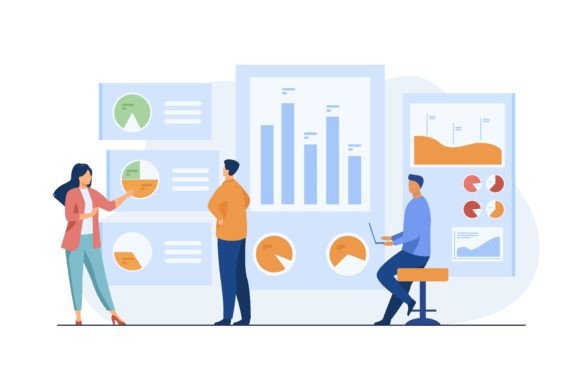
The Art and Science of Data Analysis: A Modern Office Illustration
In today's fast-paced business environment, the process of transforming raw data into actionable strategy is both critical and complex. The concept of Office Workers Analyzing and Researching business data is more than just a task; it's a nuanced ecosystem of collaboration, critical thinking, and visual communication. This article explores this vital workplace function, demystifying the roles, tools, and tangible outcomes that drive informed decision-making.
What Does "Analyzing and Researching" Look Like in Practice?
The image of professionals huddled around a vibrant dashboard isn't merely artistic. It represents a real-world convergence of skills. Office Workers Analyzing and Researching typically involves a multi-stage process. It begins with data collection—gathering figures from sales, marketing, operations, or financial reports. This raw information is then cleaned, organized, and fed into analytical software. The true research phase begins here, as analysts seek patterns, correlations, and anomalies.
Key characteristics of this environment include:
- A Collaborative Atmosphere: Rarely is analysis a solitary act. Teams often brainstorm interpretations.
- A Visual Focus: Infographics, charts, and diagrams are central tools for understanding complex datasets.
- Goal-Oriented Inquiry: Every session of analysis is directed by a business question, such as "Why did sales dip in Q3?" or "What is our customer demographic shift?"
- A Blend of Precision and Creativity: While the numbers are precise, deriving strategy from them requires creative problem-solving.
The Unseen Value Behind the Dashboard
Why is this function so valuable? For business owners and managers, the output of Office Workers Analyzing and Researching transforms uncertainty into confidence. It moves a company from operating on instinct to acting on evidence. This process provides a clear, data-backed foundation for strategic plans, marketing campaigns, resource allocation, and risk assessment. In essence, it brings a level of tangible clarity to the often intangible world of corporate strategy.
Who Benefits from This Analytical Process?
The applications are vast, extending far beyond a single department.
- Marketing Teams: They rely on analysis to measure campaign ROI, understand audience engagement, and optimize ad spend.
- Financial Analysts: Their research into cash flow, profitability, and market trends is the bedrock of fiscal health.
- Product Developers: User feedback data and market research guide feature innovation and design choices.
- Small Business Owners: Even a solo entrepreneur analyzing their own sales data is engaging in this essential practice.
- Content Creators: Bloggers and social media managers research analytics to understand what resonates with their audience.
Ultimately, any professional whose work is influenced by metrics, trends, or performance indicators will find value in understanding this analytical ecosystem.
Strengths and Practical Considerations
Embracing a culture of diligent analysis offers significant strengths. It reduces bias in decision-making, identifies opportunities for growth, and can highlight operational inefficiencies before they become costly. The visual nature of modern dashboards, as depicted in illustrations of Office Workers Analyzing and Researching, also enhances team alignment—a chart can communicate a complex trend faster than a paragraph of text.
However, there are important considerations. Data quality is paramount; analyzing flawed or incomplete data leads to misleading conclusions. There's also a need for balance. Over-analysis, or "paralysis by analysis," can stall action. Teams must learn to extract key insights efficiently and act upon them. Furthermore, the tools and software used require investment and training. The harmonious blend of art and commerce only occurs when the team is both technically proficient and strategically minded.
Real-World Scenarios: From Data to Action
Imagine a retail company noticing a gradual decline in online purchases. A team engaged in Office Workers Analyzing and Researching would dive into their dashboard. They might segment data by customer region, time of day, or product category. Their research could reveal that checkout abandonment spikes on a specific payment page. The creative insight? Perhaps a technical glitch or a lack of preferred payment options. The precision comes from the exact percentage of abandoned carts. The resulting strategic plan is clear: fix the payment interface. This tangible outcome, born from analytical research, directly impacts revenue.
Evaluating Your Own Analytical Needs
How can you assess if your projects or business would benefit from a more structured approach to data analysis? Start by asking key questions:
- Do you make regular decisions based on gut feeling rather than documented evidence?
- Is there data available (sales logs, website analytics, customer feedback) that you are not systematically reviewing?
- Would visual representations of your performance (like infographics) help your team or stakeholders understand challenges better?
- Are you facing recurring problems that might have hidden, data-driven causes?
If you answered yes to any of these, incorporating elements of systematic Office Workers Analyzing and Researching could provide significant clarity. The goal isn't necessarily to build a large analytics department overnight. It begins with a commitment to ask questions, seek the relevant numbers, and use those figures to inform your next step.
The Fusion of Creativity and Precision
At its core, this process is a fusion. The precision lies in the immutable truth of accurate data points. The creativity flourishes in the human interpretation—connecting dots, hypothesizing causes, and designing innovative solutions. The illustration of professionals engrossed in a vibrant dashboard captures this duality perfectly. It serves as a reminder that in the modern office, the calculator and the brainstorm are not opposites; they are partners. Understanding the dynamic interplay of Office Workers Analyzing and Researching business data is understanding how successful organizations navigate the complexities of the contemporary market.
For creators and general consumers, this concept also applies. Analyzing the performance of a personal blog, researching the best times to post on social media, or evaluating the reach of a creative project are all applications of the same principle. It makes the abstract tangible, turning vague feelings of success or struggle into clear, actionable information.
By embracing this analytical mindset, professionals across fields can move from simply working to working smart, using the powerful combination of research and insight to pave their way forward.