Bringing Dental Health to Life: The Power of a Tooth SVG Illustration
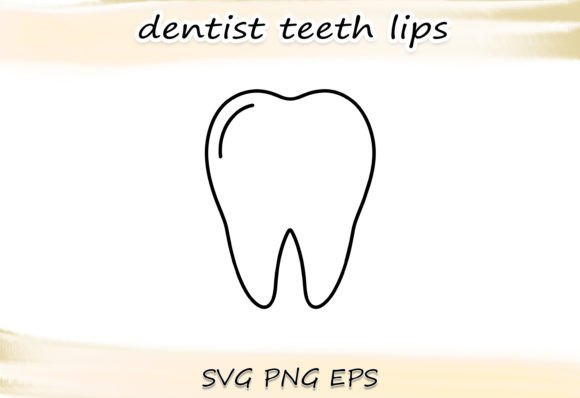
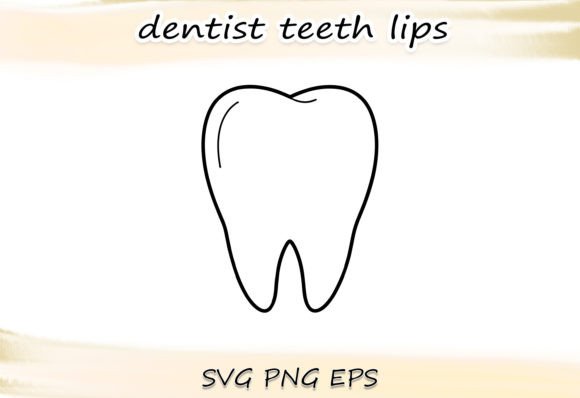
Imagine you need a graphic of a tooth. Maybe for a blog post, a presentation, or a flyer for your clinic. You search online and find a collection of pixel-based images—some blurry, some cartoonish, none quite right. This is where the concept of a Tooth SVG changes everything. Unlike a standard JPEG or PNG, an SVG (Scalable Vector Graphic) is built from mathematical paths and points. This means a Tooth SVG is a crisp, infinitely scalable illustration of a single tooth, with contours, cusps, and roots rendered in sharp, clean lines. It's not a photograph; it's a precise digital blueprint of dental anatomy.
Why a Simple Tooth Graphic Matters More Than You Think
At first glance, a vector illustration of a tooth might seem like a niche tool. But its utility spans far beyond just "dentistry." The key is its combination of accuracy and flexibility. Because it's vector-based, you can resize it from a tiny icon to a massive poster backdrop without any loss in quality. Its lifelike detail makes it authoritative, while its digital nature makes it a versatile asset for anyone communicating about oral health.
Consider your own experiences. Have you ever clicked away from a website because its medical graphics looked outdated or childish? Or struggled to explain a dental concept to a patient because your visual aids were inadequate? A professionally crafted Tooth SVG addresses these gaps directly. It provides a modern, credible visual foundation that you can adapt to your specific message.
The Dentist's Toolkit: Beyond the Clinic Walls
For dental practitioners, the applications are immediate and practical. A Tooth SVG becomes the core visual for patient education materials. You can use it in pamphlets explaining cavity formation, highlighting where a crown will be placed, or illustrating the anatomy of a root canal. On your clinic's website, it can serve as a clean, reassuring visual element on service pages, breaking down the clinical jargon with clear imagery. For social media posts aimed at community education—perhaps during National Dental Health Month—this vector graphic ensures your content looks polished and professional, increasing engagement and trust.
Content Creators and Educators: Visualizing Knowledge
If you're a health blogger, a wellness coach, or a science educator, your challenge is making complex information accessible. A detailed Tooth SVG is a powerful ally. You can incorporate it into infographics comparing healthy versus decayed enamel, or use it as a base diagram in video tutorials about proper brushing technique. Textbook publishers and online course creators can use it to illustrate chapters on human biology. Its realism lends weight to your content, showing readers you're invested in accuracy, not just generic clip art.
Transformative Uses in Design and Marketing
The reach of this tool extends into commercial and creative fields. Marketing agencies working for dental insurance companies, toothpaste brands, or oral hygiene startups need high-quality assets. A Tooth SVG can be the centerpiece of a full advertising campaign—adapted for app icons, website banners, and print brochures. Its consistency across all media strengthens brand recognition.
Product designers might use it on packaging for dental care kits. App developers can integrate simplified versions of the graphic into interactive oral health trackers, where users can tap on different parts of the tooth to learn more. Even in unexpected places like the design of a children's book about health, a friendly but accurate tooth illustration can make the subject more approachable.
Common Considerations Before You Use a Tooth SVG
While the benefits are clear, a few practical points deserve attention. First, ensure you have the right software. SVG files are editable in programs like Adobe Illustrator, Inkscape (a free alternative), or even some advanced web design tools. If you only use basic word processors, you might need to convert the SVG to a PNG for your specific use, which can be done online but locks you into a fixed size.
Second, think about customization. A good Tooth SVG should have editable layers. Maybe you need to color the crown differently from the root to explain a procedure, or add a transparent effect to show an inner cavity. Check if the file you obtain allows for this level of manipulation. Third, consider your audience's perception. An overly complex, scientific illustration might intimidate young children. Sometimes, a simplified version derived from the main SVG might be more appropriate for certain audiences.
Strengths and Natural Limitations
The primary strength of a Tooth SVG is its unparalleled scalability and clarity. It is a "future-proof" asset. Whether today's project is a mobile screen or tomorrow's is a large conference banner, the same file works perfectly. It also supports a transparent background, making it incredibly easy to overlay onto any design or color scheme.
A potential limitation is its specificity. It is a detailed illustration of a *single* tooth—typically a molar or premolar showing clear anatomical features. It is not a set of teeth, nor does it show diseases or procedures automatically. It is a foundational tool. You, the user, build the story around it. It provides the realistic canvas; you add the labels, the colors, the annotations, or the surrounding context to convey your exact message. This requires a bit of creative or instructional design effort, but that effort is what tailors the graphic to your unique need.
Furthermore, its effectiveness hinges on the quality of the original vector artwork. A poorly drawn SVG with inaccurate anatomy or clumsy lines will undermine its purpose. Seeking a source that offers a "true-to-life," scientifically referenced illustration is crucial.
From Digital Asset to Real-World Impact
Ultimately, enriching your oral health projects with a Tooth SVG is about enhancing communication. It bridges the gap between abstract dental concepts and tangible understanding. For a patient, seeing a precise graphic can demystify a treatment. For a reader, it can make learning about enamel more engaging. For a brand, it can elevate the entire visual identity of a campaign.
It turns generic dental talk into a visualized conversation. By starting with this core element of accuracy and realism, every subsequent piece of information you attach to it—whether it's about prevention, treatment, or product benefits—gains more credibility and clarity. That’s the real transformation it offers: not just a better graphic, but a more effective way to connect with people about a vital aspect of their health.