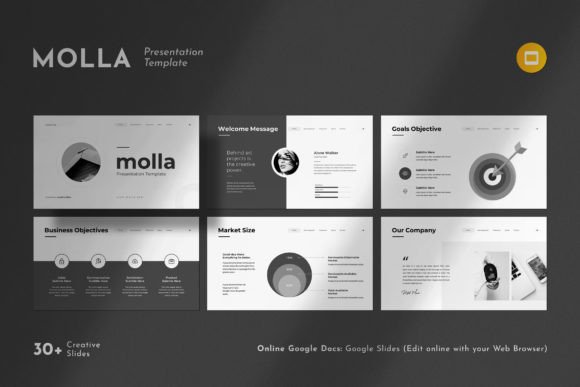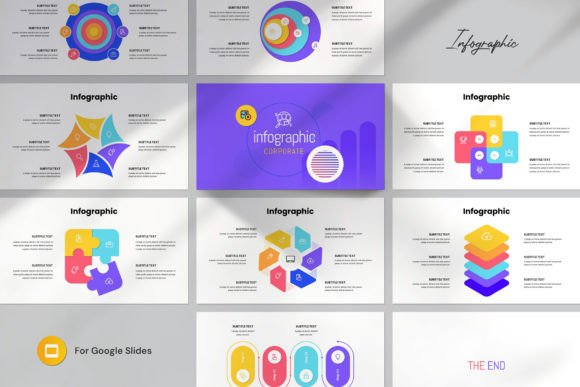
The Infographic Google Slides Template: Your Practical Hub for Modern Presentations
In today’s professional landscape, communicating information clearly and compellingly is not a luxury—it’s a necessity. Whether you’re pitching to investors, training a team, reporting on quarterly results, or showcasing your company’s profile, the medium you choose can dramatically amplify or dilute your message. This is where a specialized tool like the Infographic Google Slides Template becomes a central asset in your workflow. It is not merely a set of slides; it is a designed system engineered to transform raw data and ideas into a visually coherent narrative, directly within the familiar, collaborative environment of Google Slides.
Where It Fits: Bridging the Gap Between Idea and Delivery
The creation of a significant presentation often begins with a collection of concepts, statistics, and goals. The gap between this raw material and a polished, audience-ready deck is where many projects stall. The Infographic Google Slides Template acts as a bridge. It fits into the process after initial research and content gathering, but before the arduous stage of manual design and formatting. By providing a structured, professional framework, it allows you to focus on curating and refining your message rather than wrestling with alignment, color schemes, and graphical consistency.
Consider the common workflow: you have your content outlined in a document or notes. The next step is building the visual companion. Instead of starting from a blank slide, you open the template. Its pre-built master slides, infographic layouts, and diagrammatic elements serve as a direct translation layer. Your workflow shifts from “how should I design this chart?” to “which of these excellent chart designs best suits my data?” This reorientation saves mental energy and time, streamlining the path from preparation to execution.
Integration with Tools and Team Dynamics
A key strength of this template is its seamless integration with the tools and platforms already central to modern collaborative work. Being a Google Slides template means it lives natively in Google Drive. This facilitates real-time co-editing with colleagues, clients, or stakeholders, regardless of their operating system—a crucial feature noted in its compatibility with both Apple and Windows systems. You can share the link, and contributors can edit online via their web browser with no specialized software required.
This interoperability extends to other assets. The template’s design, with its easy drag-and-drop picture replacement and fully resizable graphics, allows you to incorporate existing company logos, product photography, or external vector assets without friction. The inclusion of a 4000 icons pack and the use of free fonts further reduces dependency on external resources, keeping your project contained and consistent within the template’s ecosystem. For teams, this promotes uniformity; when marketing, sales, and product departments all use the same foundational template, their presentations maintain a coherent brand voice, elevating the company profile across all touchpoints.
Practical Implementation: From First Open to Final Deck
Implementing the template into your routine is straightforward. Upon accessing the file, you are presented with a comprehensive library of 48 slides in total. The initial step is an audit: browse the master slides and categorized layouts—creative photo arrangements, infographic data widgets, comparative tables, process diagrams. Identify which structures align with the sections of your content outline. This is a strategic, process-oriented task that sets the foundation.
Next, begin the content migration. Using the theme color option, you can first adjust the palette to match your brand guidelines, ensuring long-term consistency across future presentations. Then, populate the slides. For text-heavy sections, use the clean text masters. For performance metrics, choose from the various infographic slides. To explain a complex workflow, select a corresponding diagram and tailor it using the editable vectors. The process is modular. You are not building from atoms; you are assembling from well-crafted molecules.
A practical tip for quality control and efficiency: utilize the master slide system. If you need to globally change the font or footer layout, edit the master. This one change propagates throughout all slides based on that master, safeguarding organizational efficiency. Furthermore, because all graphics are editable within Google Slides itself, you can fine-tune details without ever leaving the environment, maintaining a smooth, uninterrupted workflow.
Use Cases Across Professional Roles
The utility of this template extends across the diverse audience it serves. For an entrepreneur, it becomes a tool for crafting investor decks and business plans, where clear financial infographics and roadmap diagrams are paramount. For a marketer, it’s the engine for campaign reports and competitor analyses, leveraging the table and comparison slide designs. Educators and trainers can build engaging instructional materials, using the visual layouts to break down complex topics.
Freelancers and small business owners, often without dedicated design support, find it empowers them to create client presentations that look polished and professional, directly impacting perceived credibility. Bloggers and content creators can repurpose the template for creating visual content for web articles or online courses. Even for personal use, such as planning a major project or visualizing personal goals, the template provides a structured yet flexible canvas. The common thread is the elevation of communication from informal to authoritative, without requiring formal design knowledge.
Ensuring Long-Term Usability and Support
Adopting a new tool into your workflow involves consideration of its long-term viability. The Infographic Google Slides Template is built for sustained use. Its 16x9 Full HD ratio (1920x1080px) is the industry standard for digital displays and projectors, ensuring compatibility with presentation hardware now and in the future. The detailed PDF guide and linked help file provide a reference for deeper customization, acting as a knowledge base you can revisit.
Perhaps most significantly for seamless integration, the provision of free real support from skilled designers addresses the inevitable hiccups. Whether you have an inquiry about a specific feature or need help adapting a graphic, having direct access to expert support minimizes downtime and frustration. This turns the template from a static product into a supported solution, integrated into your toolkit with confidence.
Conclusion: A Workflow Catalyst
Ultimately, the Infographic Google Slides Template is more than a collection of pretty slides. It is a workflow catalyst. It intervenes at the critical point where content meets design, automating the arduous parts of presentation creation and standardizing the output. It integrates cleanly with collaborative platforms and existing digital assets. Its design encourages consistency, which in turn builds brand authority over time. By removing technical barriers, it allows professionals, creators, and business owners to allocate their energy where it matters most: on the clarity, impact, and strategic intent of their message. In a process-oriented view of work, such tools are indispensable. They don’t just make tasks easier; they make outcomes better.